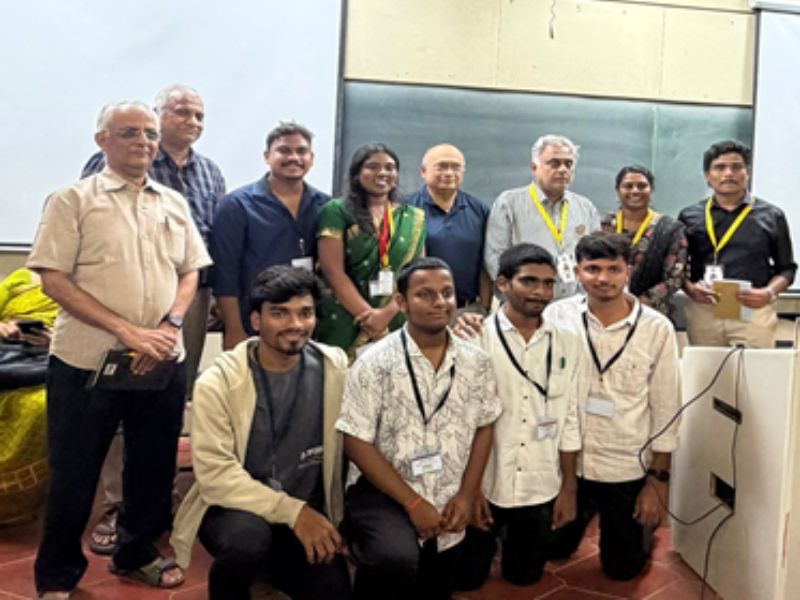
The recent success of "The Social Innovators" and "Mechanizers" at the Think2Impact workshop serves as a powerful testament to the department's evolving pedagogical framework. By securing top honors in an arena defined by industry standards, these teams have validated the strategic focus on merging social-technical innovation with rigorous core engineering principles. This dual approach ensures that students are not merely technically proficient but are also socially conscious designers, capable of identifying the human element within complex technical problems. The achievement highlights a shift from theoretical learning to a model of "applied excellence," where the classroom serves as a laboratory for high-stakes, real-world application.
Furthermore, this victory in a competitive, industry-linked forum underscores the high level of professional readiness and systematic thinking inherent in the student body. The ability to navigate the intricacies of a workshop that demands both creative problem-solving and technical feasibility suggests that our students are well-equipped to bridge the gap between academic concepts and market-ready solutions. By addressing multifaceted challenges through a structured, methodical approach, they have demonstrated that they can hold their own against elite peers and industry expectations. This milestone not only enhances the department’s reputation but also reinforces the value of an integrated curriculum that prepares engineers to be both inventors and impact-makers in a rapidly changing global landscape.
Beyond the immediate accolades, the performance of these teams signals a robust culture of mentorship and collaborative inquiry within the department. To reach the top ranks of Think2Impact requires more than just individual talent; it requires a supportive ecosystem that encourages cross-disciplinary exploration and the courage to iterate on bold ideas. The "Mechanizers" represent the strength of traditional engineering foundations, while "The Social Innovators" reflect the necessity of empathetic design, and their collective triumph proves that these two paths are most effective when they intersect. Moving forward, this success will serve as a benchmark for future cohorts, inspiring a new standard of excellence where technical mastery is always measured by its ability to create a tangible, positive influence on society.