IKARUS, a premier state-level technical fest organized by the Student Council of KGRCET’s Department of Student Council. Established in 2022, IKARUS aims to provide an exceptional platform for B.Tech students to showcase their technical acumen, foster innovation, and excel in their chosen fields. As an event that celebrates the spirit of technological advancement, IKARUS is committed to nurturing the next generation of engineers, problem-solvers, and visionaries.
At IKARUS, we believe in cultivating a culture of technical excellence and innovation. Our fest brings together a diverse array of clubs that cater to various domains, offering students the opportunity to explore and deepen their expertise in areas such as Artificial Intelligence, Data
Science, App and Web Development, Blockchain, 3D Printing, Electric Vehicles, Internet of Things (IoT), and Green Construction, among others. Each club serves as a hub for knowledge exchange, enabling students to engage with like-minded peers, collaborate on projects, and delve deeper into their respective areas of interest
Through a series of workshops, competitions, and interactive sessions, IKARUS provides a dynamic and conducive environment for students to enhance their technical proficiency, develop critical skills, and stay abreast of the latest trends and developments in their fields. Whether you are participating in challenging coding contests, robotics competitions, or brainstorming sessions, or you are gaining hands-on experience through various workshops, IKARUS offers a comprehensive platform for learning, growth, and networking.
This fest is not just about showcasing talent, but also about fostering a collaborative spirit, challenging conventional thinking, and pushing the boundaries of what is possible. Together, we aim to inspire and empower the next generation of technology leaders, shaping the future of innovation and driving meaningful impact in the world.
Events Conducted :
BINARY BRAINS:
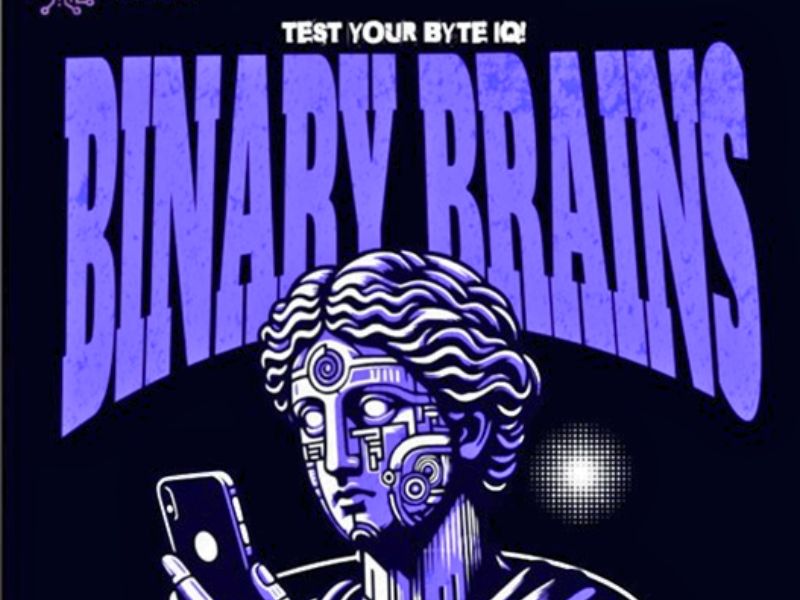
Objective: "Binary Brains" introduces first-year students to fundamental data science and Python programming concepts through two progressively challenging rounds.
Round 1: A multiple-choice quiz on data science basics and introductory Python programming, designed to build confidence in students' knowledge.
Round 2: Students engage in error-identification tasks in Python code, focusing on debugging with conditional statements and loops, emphasizing logical thinking and problem- solving.
2.CODE CRUSADE
Objective: Designed exclusively for Second-year students, “Code Crusade” allows participants to demonstrate proficiency in coding patterns and business intelligence (BI) tools. This two-round event encourages both technical rigor and creativity.
Round 1: Students write Python code to generate and display specified patterns, showcasing their understanding of loops, logic, and structural coding.
Round 2: Participants create dashboards in Power BI using datasets provided in Excel format, applying skills in data analysis, visualization, and BI
DATA WIZARDS
Objective: "Data Wizards" challenges third-year students in coding, data analysis, and data visualization with two rounds designed to test their advanced problem-solving abilities.
Round 2 - Data Diving and Visualization Voyage, where they analyzed complex datasets to extract meaningful insights and presented
. their findings through impactful visualizations. The third-year students
particularly stood out, showcasing exceptional data storytelling skills by creating clear, engaging visualizations that effectively communicated their insights. Their work demonstrated advanced proficiency in both data analysis and visualization, underlining their critical thinking and ability to present data-driven narratives with clarity and precision
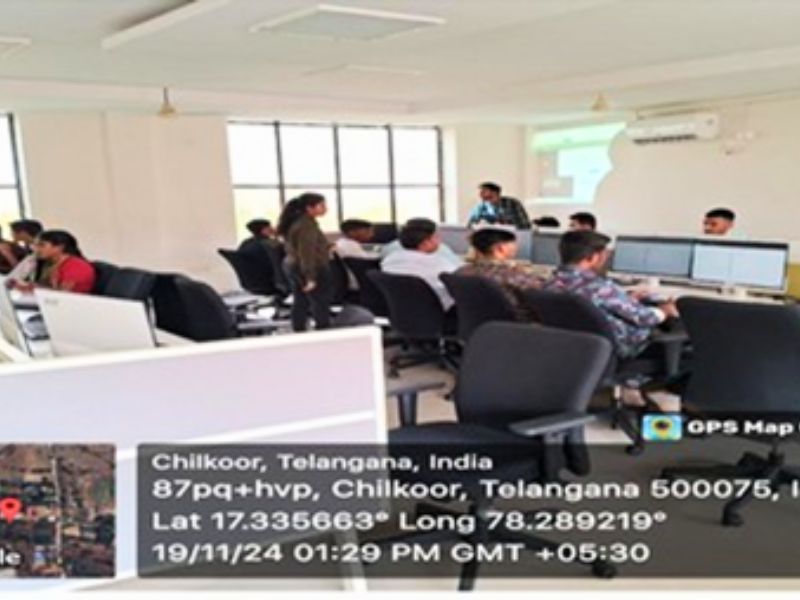
Workshop on Basics of Python conducted on 19th November 2024:
this workshop, students were introduced to the fundamental concepts of Python programming, including sets, tuples, loops, and functions. These core concepts provided students with a strong foundation to understand the syntax and functionality of Python. Through detailed explanations and interactive discussions, students gained a clear understanding of how to apply these elements to write simple yet effective Python code. To reinforce these concepts, students participated in hands-on exercises and practice sessions on platforms like HackerRank, which offered them real-world problems to solve. These practical sessions were designed to foster applied learning, enabling students to sharpen their coding skills, improve their problem-solving abilities, and become more confident in their programming capabilities
By the end of the workshop, students were not only able to grasp the essentials of Python programming but also gained the necessary skills to move on to more advanced topics. The exposure to various coding challenges and problem-solving exercises helped them build a solid foundation in Python, equipping them with the confidence to tackle more complex programming tasks in the future. Moreover, the hands-on approach sparked curiosity and encouraged students to continue learning, explore more advanced Python topics, and participate in coding challenges to further enhance their skills.